
Transitive and Intransitive Verbs
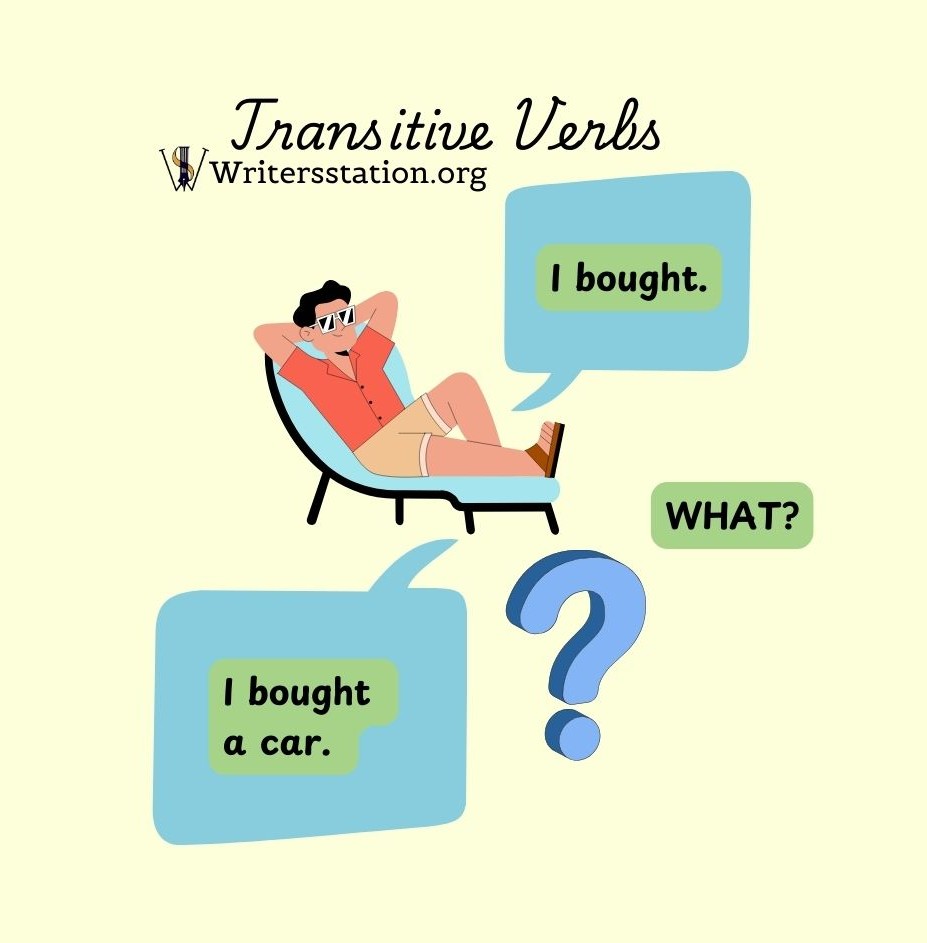
Transitive verbs need a direct object to complete the idea in the sentence. If you have to ask questions like “what” or “whom” after the verb, then the verb is a transitive verb.
For example, “I built” is incomplete because the readers automatically think, “built what?”
“Built” is a transitive verb because you need to add a direct object to complete the sentence.
The correct way to use this verb would be, “I built a chair”.
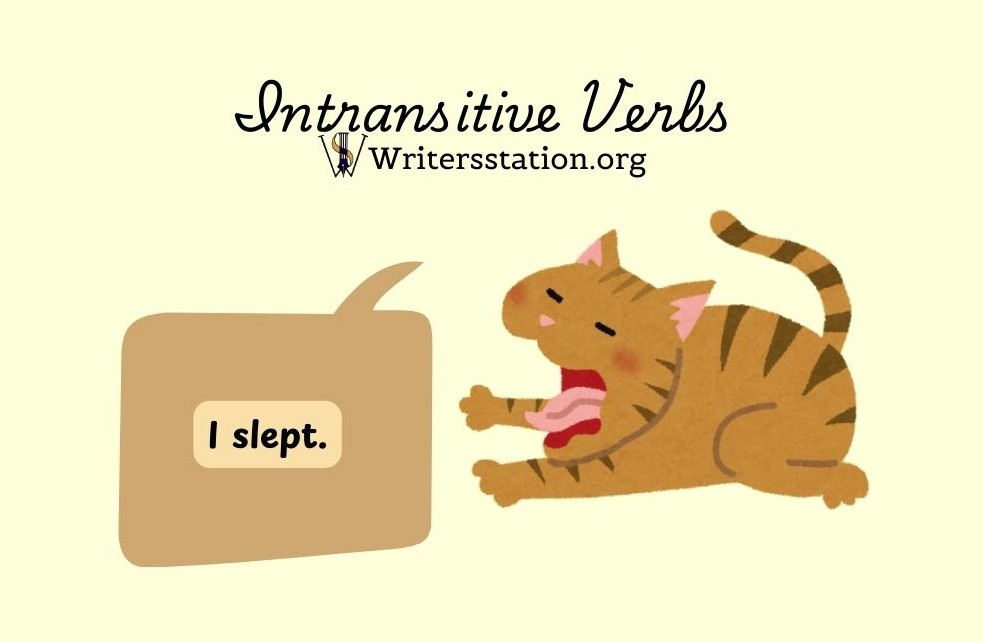
Intransitive verbs do not need a direct object. Intransitive verbs will still convey a complete idea without a noun or pronoun that follows it. The verb doesn’t act upon anything or anyone.
For example, “I arrived” or “I laughed” do not require direct objects after the verb. Arriving or laughing is not done to someone or something.
Transitive and Intransitive Verbs Worksheet #1
[Grades 4-6] Transitive and Intransitive Verbs #1
Worksheet with Answers
[Grades 4-6] Transitive and Intransitive Verbs #1
Worksheet Only
[Grades 4-6] Transitive and Intransitive Verbs #1
Answers Only
Powered By EmbedPress
Powered By EmbedPress
Powered By EmbedPress
Transitive and Intransitive Verbs Worksheet #2
[Grades 4-6] Transitive and Intransitive Verbs #2
Worksheet with Answers
[Grades 4-6] Transitive and Intransitive Verbs #2
Worksheet Only
[Grades 4-6] Transitive and Intransitive Verbs #2
Answers Only
Powered By EmbedPress
Powered By EmbedPress
Powered By EmbedPress
Transitive and Intransitive Verbs Worksheet #3
[Grades 4-6] Transitive and Intransitive Verbs #3
Worksheet with Answers
[Grades 4-6] Transitive and Intransitive Verbs #3
Worksheet Only
[Grades 4-6] Transitive and Intransitive Verbs #3
Answers Only
Powered By EmbedPress
Powered By EmbedPress
Powered By EmbedPress